About the autumn berry.
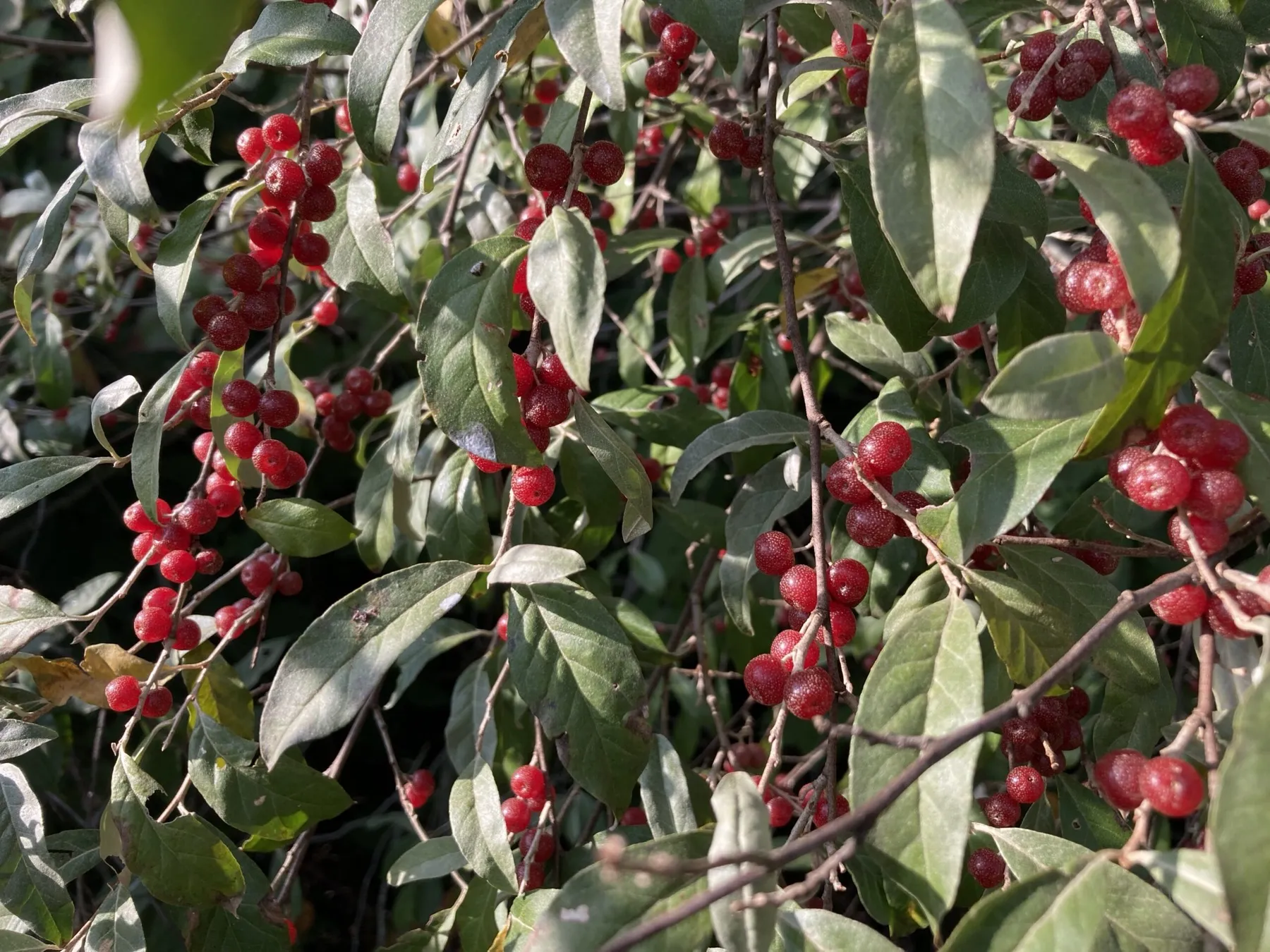
The small, red, edible fruit of autumn olive, Elaeagnus umbellata. Despite the name, it isn't an olive.
- Plant
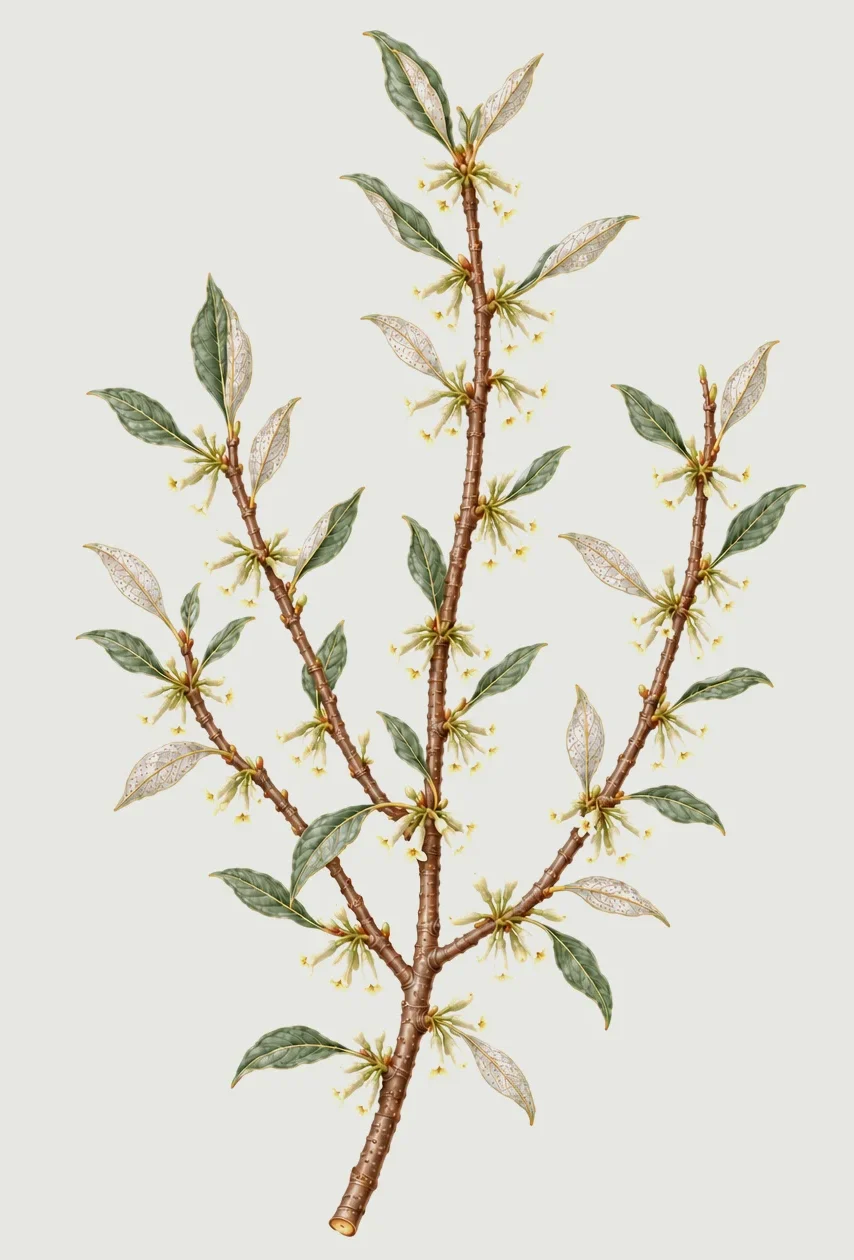
- Autumn olive, a shrub or small tree with fragrant ivory flowers and silvery-green leaves.
- Fruit
- Small and red; sweet and tart when ripe in the fall.
- Arrived
- Brought from Asia and planted in North America between the 1930s and the 1970s.
- Status
- On several invasive species lists since the 1980s.
- Notable
- 17 times the lycopene of tomatoes, per the USDA.
A delicious, versatile fruit.
Autumn berries grow on the autumn olive, a tree with fragrant ivory flowers and silvery-green leaves.
The USDA found autumn berries contain 17 times the lycopene of tomatoes, along with high levels of protein, vitamins A, C and E, and essential fatty acids. Lycopene “is considered an important phytonutrient, and is thought to prevent or fight cancer of the prostate, mouth, throat and skin, and to reduce the risk of cardiovascular disease” (Black, B.L. and I. Fordham, 2005).
The berries ripen sweet and tart in the fall and can be made into a wide range of foods. All year the trees give food and shelter to wildlife, and nitrogen-fixing nodules on their roots help them get by in poor soil.
According to the USDA, autumn olive can be very persistent once it's established, growing back from the roots when it's cut down or mowed. Between that persistence, birds and other wildlife spreading its seed, and its knack for thriving in poor soil, wild populations now grow throughout the eastern and central United States and Canada. As a result, autumn olive is on several invasive species lists.
Restoration agriculture.
Conservationists brought autumn olive to North America from Asia between the 1930s and the 1970s, and planted it along highways, farms, lakes and rivers. They knew it could do ecological work, as windbreaks, erosion control, wildlife habitat and forage, and that it could rebuild soil wrecked by agriculture and development.
In the disturbed soils of North America, autumn olive adapted and proved itself uncontrollable. Birds carried its seeds to places where colonizers had cleared and tilled ancient prairies, wetlands, savannas and forests. Autumn olive moves into these depleted lands and starts the processes of succession and soil regeneration. Almost at once, diversity appears in what first looks like a monoculture of autumn olive. On once-bare land, insects, fungi, birds and mammals show up, while taller trees grow above and eventually shade out the sun-loving autumn olive. Given time, nature finds its balance and heals from the wounds of human disturbance.
Unfortunately for autumn olive, that kind of regeneration takes longer than the modern attention span. The profit in endlessly battling introduced species, and the look of manicured lawns and “native-only” landscapes, won out. Beginning in the 1980s, autumn olive and many other “successful but misunderstood” species were declared invasive in many of the places they had been so purposefully planted. Across North America, conservationists now teach new generations about the “dangers of aggressive foreign invaders,” and encourage us to allow only species that behave, and that were present before some uncertain pre-colonial point in time.
Let's harvest all the autumn berries we can, but not plant any more.
Make jam, not war.
We sympathize with the economic and ecological damage caused by our colonial history of moving species around the planet willy-nilly. As a culture, we have a long way to go toward healthy relationships with all wildlife, “native” and “introduced” alike.
That's why our autumn berry puree and seedless preserves always carried the same message: make jam, not war, with the natural world around us. We can control exotic species like autumn olive and Asian carp with industry, knowledge and compassion, rather than indoctrination, extermination and mono-cropped agriculture.
Our mission is to show that this man-made ecological “problem” is an untapped resource, and a misunderstood part of the North American ecosystem.
With your support, we may all come to appreciate and enjoy Elaeagnus.